
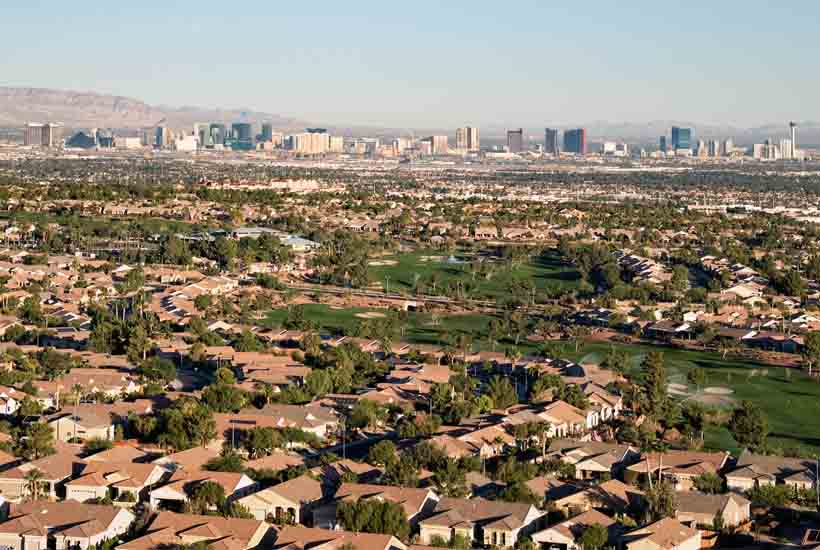
The Las Vegas housing market in 2025 is characterized by rising home prices, strong buyer demand, and inventory constraints. With an influx of out-of-state buyers and shifting economic factors, the market remains highly competitive. This report explores key trends, including home price fluctuations, interest rate impacts, and investment opportunities, providing a comprehensive outlook for buyers, sellers, and investors.
Current Market Trends
The Las Vegas housing market in 2025 is shaped by economic forces, demographic shifts, and changing buyer preferences. Home prices continue to rise, with the median price of existing single-family homes in Southern Nevada reaching $485,000 in January 2025, a 9% increase from $445,000 in January 2024. The combination of high demand and limited supply has intensified competition, making it a seller’s market.
The influx of out-of-state buyers, particularly from California, is driving this trend as they seek more affordable homeownership opportunities. Moreover, the rise of remote work has shifted buyer preferences toward suburban and luxury properties, increasing demand in neighborhoods with strong amenities and accessibility.
Average Home Prices in 2025
The median listing price for homes in Las Vegas has reached $459,900, reflecting a steady increase driven by strong buyer demand and limited inventory. Despite rising prices, Las Vegas remains more affordable compared to other major metropolitan areas, making it an attractive market for both first-time buyers and investors.
Luxury properties continue to see substantial growth, particularly in Henderson’s 89012 ZIP code, where the median listing price stands at $2.1 million. This demand for high-end real estate is fueled by out-of-state buyers seeking spacious homes in desirable communities.
For those looking at more affordable housing options, prices for condos and townhomes remain lower than single-family homes, providing opportunities for entry-level buyers. As competition persists, buyers should be prepared for a fast-moving market with homes receiving multiple offers shortly after listing.
Inventory Levels and Housing Availability
Housing inventory in Las Vegas has expanded significantly in 2025, with the number of available homes increasing by 46.9% compared to the previous year. This surge in supply provides buyers with more options, easing some of the constraints seen in prior years. New construction projects continue to contribute to inventory growth, particularly in expanding suburban communities. However, affordability remains a concern, as rising material costs and labor shortages have limited the pace of development.
Builders are prioritizing mixed-use developments and high-density housing, aiming to meet demand while optimizing available land resources. The increase in available properties may moderate home price growth, but demand remains strong in key neighborhoods. However, the pace of new listings entering the market has yet to meet demand, further reinforcing upward price trends.
Buyer Demand and Market Competition
The Las Vegas housing market began 2025 with record-high home prices, reflecting strong buyer demand and heightened competition. In January alone, 1,991 homes, condos, and townhomes were sold, marking a 6.7% increase compared to the previous year. This surge in sales underscores the continued interest from buyers despite rising prices. First-time buyers, particularly Millennials and Gen Z, are actively entering the market, taking advantage of stabilized mortgage rates. However, competition remains intense, with multiple-offer scenarios becoming more common, requiring buyers to act quickly and make competitive bids.
Investors continue to drive competition, acquiring properties for rental income and long-term appreciation. Their activity has further limited housing availability, particularly in high-demand areas. This activity has contributed to limited housing availability, particularly in desirable neighborhoods and gated communities.
Current rates remain lower than historical averages, making homeownership accessible despite rising home prices.
However, affordability challenges persist as wages struggle to keep pace with property values. Buyers must carefully assess loan options and financial strategies to navigate the competitive landscape.
Neighborhood Comparisons: Where Are Buyers Moving?
Las Vegas offers a variety of neighborhoods that cater to different buyer needs. While affordability and investment potential drive some choices, others prioritize lifestyle and amenities. Understanding these differences helps buyers make informed decisions about where to settle. Some of the most sought-after areas in 2025 include:
- Summerlin – A highly desirable master-planned community known for its top-rated schools, extensive outdoor recreation, and well-designed neighborhoods. It remains a top choice for families and professionals seeking a suburban environment with upscale amenities.
- Henderson – A rapidly growing city with a strong economy, excellent schools, and a mix of suburban tranquility and urban convenience. Henderson continues to attract buyers looking for spacious homes and a high quality of life.
- North Las Vegas – A hub for new developments, offering affordability compared to other parts of the metro area. This region attracts budget-conscious buyers and investors looking for long-term appreciation potential.
- Downtown Las Vegas & Arts District – The heart of the city’s entertainment and cultural scene, featuring high-rise condos, historic homes, and a walkable lifestyle. The Arts District, in particular, is known for its creative community and thriving local businesses, making it a hotspot for professionals and investors.
While these neighborhoods offer distinct advantages, factors such as affordability, amenities, and long-term investment potential continue to shape buyer decisions. Beyond location, broader economic trends play a significant role in influencing the overall housing market in Las Vegas.
Economic Factors Influencing the Market
The broader economy plays a crucial role in shaping housing trends. Key factors impacting the Las Vegas market include:
- Interest rates – Mortgage rates have stabilized after previous fluctuations, giving buyers more confidence in the market. Although current rates remain lower than historical averages, affordability remains a challenge as wages struggle to keep pace with home price increases.
- Tourism and hospitality recovery – A rebound in travel is boosting local employment, supporting increased housing demand.
- Population growth – The influx of new residents from higher-cost states is driving home purchases and intensifying competition. In fact, home builders and legislatures have concerns that Las Vegas may actually be running out of land to build houses.
- Infrastructure and development – Expansion projects across the metro area are enhancing livability and contributing to long-term property value appreciation.
As these economic factors continue to evolve, their long-term effects on the Las Vegas housing market will become more apparent. Buyers, sellers, and investors should closely monitor these trends to navigate the market effectively.